


Secure. Self-Reliant. Sustainable.
Corporate Overview
Achieving Carbon Neutrality by 2050
Financial Performance

Supplementary Information
Message from the Chairman and Managing Director
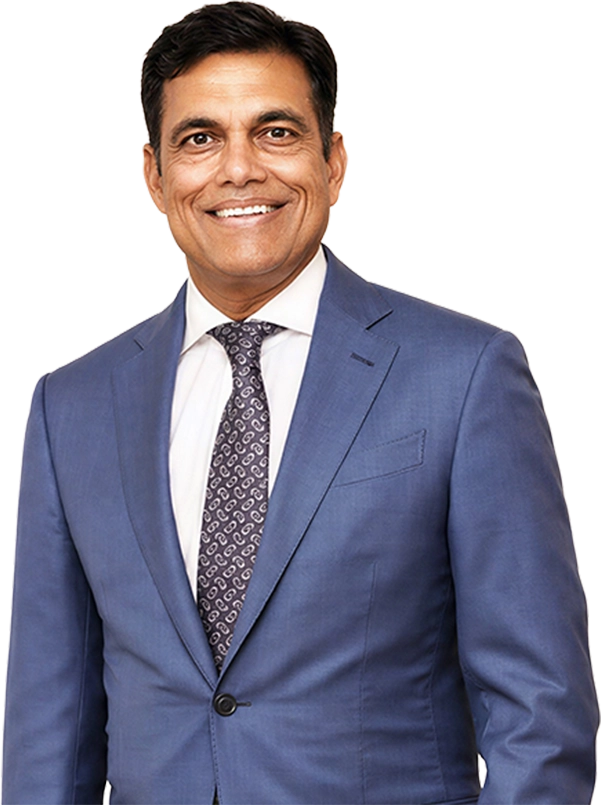
Dear Shareholders,
FY 2026 was a true inflection point – defined not just by progress but by transformation. Strategy 3.0 moved decisively from ambition to execution with outcomes that are clear and compelling. JSW Energy nearly doubled its installed capacity in two fiscal years, delivered record performance across every metric, and strengthened its capital base, asset portfolio and future pipeline to anchor India's energy future. We are not growing by chance. We are growing by design.
India's Energy Imperative: A Structural, Not Cyclical Shift
FY 2026 presented a mixed demand environment for India's power sector with the demand growth moderating to 0.9%. However, despite the softer growth rate, the structural strength of underlying demand remained evident as peak demand continued to reach new highs, touching ~245 GW in January 2026.
The most significant development has been the strong rebound in demand from late Q4 of FY 2026 into April–May 2026, signalling a clear inflection in the demand cycle. India set an all-time peak power demand record of 271 GW in May 2026 — with broad-based demand drivers visible. This is not a seasonal spike. It is the signature of a rapidly industrialising, urbanising, and electrifying economy.
Electricity demand is projected to grow at 6.4% annually over the next decade, driven by 'Make in India' manufacturing corridors, AI-driven data centre investments, accelerated transport electrification, and rising household consumption. This is a structural, multi-decade transformation. The Government's commitment to 500 GW of non-fossil capacity by 2030 — alongside the pragmatic revised target of 97 GW of incremental thermal capacity by FY 2035 — makes clear that India will deliver both clean energy and reliable energy simultaneously. JSW Energy is strategically positioned to deliver on this mandate.
The Global Energy Crisis and India's Strategic Opportunity
The global energy crisis has been a defining moment – exposing the risks of over-reliance on imported fuel and premature retirement of dispatchable capacity. India drew sharp lessons. Energy self-reliance — Atmanirbharta — is now no longer an aspiration – it is a strategic necessity.
The path forward lies in harnessing domestic coal for near-term energy security, accelerating the scale-up of indigenous renewables capacity, and investing decisively in pumped hydro storage to enhance system flexibility. In this transition, domestic thermal power has re-emerged as the indispensable bridge enabling India to sustain industrial growth and improve the quality of life of its citizens without compromising reliability. JSW Energy is uniquely positioned at this intersection — combining strength in both clean energy and dispatchable power.
FY 2026: Strategy Translated into Outcomes
Installed capacity rose from 7.2 GW to 13.5 GW over the past two years, with 2.6 GW commissioned in FY 2026 alone — one of the highest rates of capacity addition in the Indian power sector. Total locked-in generation capacity stands at 32.1 GW — 13.5 GW operational, 14.0 GW under active construction, and 4.6 GW in development. Locked-in energy storage capacity stands at 29.6 GWh — 26.4 GWh through pumped hydro and 3.2 GWh through battery systems.
Financial performance in FY 2026 was unequivocally the strongest in the Company's history. Revenue grew to ₹ 19,878 crore from ₹ 12,639 crore, while EBITDA reached ₹ 11,041 crore, nearly doubling from ₹ 6,115 crore. Profit after tax reached a record ₹ 2,762 crore, compared to ₹1,983 crore in FY 2025. Cash Profit after tax stood at ₹4,359 crore translating into a healthy 18% cash return on adjusted net worth. Over the past five years, this growth trajectory has been underpinned by consistent execution and strategic acquisitions, with installed capacity expanding at a CAGR of 24%, EBITDA at 29%, and PAT at 27% – reflecting the compounding impact of strategy executed with discipline and consistency.
Net debt stood at ₹ 65,834 crore, with operational net debt-to-EBITDA of 5.2x and net debt-to-equity of 2.1x — appropriate for the largely contracted and high-quality nature of our cash flows. Liquidity exceeded ₹ 10,000 crore at year-end, further strengthened post capital raises and monetisation of JSW Steel shares in May 2026. In line with our commitment to shareholders returns, the Board has recommended a dividend of ₹ 2 per share for FY 2026.
Capital Raise: A Market Endorsement of Strategy
The capital markets have demonstrated clear conviction in our growth journey. In FY 2026 and YTD FY 2027, we executed a ₹ 3,000 crore preferential allotment to promoters and a ₹ 4,000 crore Qualified Institutional Placement in May 2026 — together among the largest equity raises in the Indian power sector in recent years. The strong participation from leading global and domestic investors, many of whom are repeat stakeholders, reflects sustained confidence in our strategy and execution capabilities. Alongside ₹ 3,150 crore realised through the monetisation of JSW Steel shares, these transactions enhance our financial flexibility and position us well to execute Strategy 3.0, while remaining on track to achieve our target net leverage of below 5x by FY 2030.
Thermal Power: Anchoring Grid Stability for a Growing Nation
Grid stability and peak demand management cannot be addressed by intermittent renewables alone – a reality acknowledged both by policymakers and reflected in our strategic choices. We are progressing the 3,200 MW Salboni thermal project in West Bengal and the 1,800 MW expansion at JSW Mahanadi with discipline and pace. Our strategic joint venture with Toshiba JSW Power Systems has helped us secure two 800 MW ultra-supercritical turbine generators for Salboni project ensuring supply-readiness in a constrained equipment environment.
The Mahanadi asset, acquired in March 2025, delivered ₹ 3,343 crore EBITDA in its first full year under JSW Energy — validating our approach to disciplined acquisition and integration. With the planned 1,800 MW expansion at Mahanadi, our total thermal pathway reaches 10,658 MW — providing a stable base load backbone while maintaining a clear portfolio tilt towards clean energy.
Hydro Generation: Largest IPP in Hydro Generation
The acquisition of the Tidong hydro power plant in Himachal Pradesh marks a significant milestone, further strengthening JSW Energy's position as the largest private hydro power producer in India. Hydro assets provide dispatchable, clean energy with long asset lives and inherent storage capabilities–attributes that are increasingly critical in a high-renewables grid. Together with our pumped hydro initiatives, our hydro portfolio offers a distinctive and growing advantage in delivering grid-balancing solutions.
Renewable Energy: Scaling with Discipline and Momentum
Renewable energy remains central to our growth. In FY 2026, we added 1.2 GW of organic capacity, comprising 378 MW of wind, 240 MW of hydro, and 618 MW of solar. Total renewable capacity has grown from 5.2 GW in FY 2025 to 7.8 GW in FY 2026 through a calibrated mix of organic and inorganic additions.
The successful completion of the 02 Power acquisition in April 2025 marks a pivotal step in this journey, adding a platform with 4.7 GW of total capacity. With 2 GW already operational and the balance expected to be commissioned by September 2027, we remain firmly on track to achieve our 30 GW capacity target by 2030, with approximately 70% attributable to renewables.
Pumped Hydro Storage: India's Long-Duration Storage Solution
Of all available storage technologies, pumped hydro stands apart: proven, scalable, long-life, and capable of storing and dispatching power at a scale and duration that batteries cannot yet match economically. As India moves toward 500 GW of non-fossil capacity, eight-hour-plus storage becomes essential to manage morning and evening demand peaks that solar cannot serve. We recognised this inflection early and have secured Energy Storage Agreements for 26.4 GWh.
Our ongoing projects in Uttar Pradesh and Maharashtra, each with 1,500 MW capacity and eight hours of storage, are progressing as planned, with Energy Storage Agreements already in place. Beyond these, our MoU pipeline with multiple states aggregates approximately 80 GWh, positioning us as a potential leader in India's long-duration storage infrastructure.
Backward Integration: Strengthening Supply Chain Resilience
We continue to enhance our supply chain capabilities to improve cost competitiveness and execution certainty. In May 2026, we entered a definitive agreement with Toshiba Corporation to increase our stake in the Toshiba JSW Power Systems joint venture from 2.4% to 10.7% — reinforcing our position as one of the few Indian power companies with end-to-end thermal manufacturing capability. The Durgapur Boiler Facility acquisition from GE Power, expected in H1 FY 2027, with capabilities to manufacture approximately two boilers of 800 MW per annum is expected to further augment our thermal captive manufacturing capabilities.
On the renewable side, our technology licensing agreement with SANY Renewable Energy for wind turbines, combined with two wind blade manufacturing facilities, of which one is already operationalised in June 2026, ensures cost competitiveness and supply certainty. Additionally, our 5 GWh battery assembly facility in Pune represents a key step toward building resilience in the energy storage value chain.
Green Hydrogen: Creating New Pathways for Decarbonisation
We have taken a pioneering step in industrial decarbonisation with the commissioning of India's first green hydrogen facility at Vijayanagar, Karnataka under the National Green Hydrogen Mission and the Government's SIGHT programme. With annual capacities of up to 3,800 metric tonnes of green hydrogen and 30,000 metric tonnes of green oxygen, this facility directly supports low-carbon steel production at JSW Steel. This initiative represents not an experiment, but the beginning of a scalable clean energy value chain, aligned with India's ambition to achieve 5 million tonnes of green hydrogen production by 2030.
Digital Transformation: Intelligence Embedded Across Operations
Managing a diversified portfolio across multiple geographies requires advanced operational capabilities. We are embedding artificial intelligence, IoT, and data analytics across our operations to enhance efficiency and responsiveness. Our state-of-the-art Command Centre in Mumbai provides real-time visibility across all assets, enabling predictive maintenance, performance optimisation, and swift decision-making.
Capital Expenditure and the Road to FY 2030
Our planned capital expenditure of over ₹ 1.15 trillion across the next four years represents the most ambitious investment programme in our history, underpinned by a disciplined return framework and a minimum mid-teen IRR threshold. By year 2030, we are targeting 30 GW of generation capacity, 40 GWh of storage, and a 70% share of renewables, alongside a clear pathway to carbon neutrality by 2050.
The structural drivers of our growth – rising energy demand, policy support for energy security, and accelerating renewable adoption – have never been stronger. JSW Energy is uniquely positioned to capitalise on this convergence and play a strategic role in India's energy transition.
Our People
Our achievements are a direct reflection of the dedication and capability of our people. I extend my sincere appreciation to every member of the JSW Energy team for their commitment and excellence. Our employees' collective efforts inspire confidence in the future we are building together. As we scale, building talent for the energy transition remains both a strategic priority and a national imperative.
Acknowledgements
I express my gratitude to the Board of Directors for their guidance and unwavering support, and to our leadership team for their steadfast focus on execution.
To our shareholders, customers, lenders, and business partners – your trust and collaboration continue to be our foundation.
Power is not merely infrastructure; it is the backbone of economic progress and societal advancement. JSW Energy remains committed to being a central architect of India's energy future – responsibly, ambitiously, and with an unwavering focus on long-term value creation.
Sincerely,
Sajjan Jindal
Chairman and Managing Director