


India’s energy transition has moved from ambition to measurable action, with solar power emerging as one of its strongest driving forces. Today, India ranks 3rd globally in solar power as well as renewable energy installed capacity, reflecting its growing leadership in clean energy deployment (IRENA RE Statistics 2026). India’s solar capacity has witnessed a 53x increase since 2014, growing from 2.82 GW to 150.26 GW by March 2026.
This momentum is further reflected in the rapid expansion of domestic solar manufacturing, with module capacity increasing from 2.3 GW to 172 GW as on 31st March 2026. Renewable energy now accounts for 51.6% of India’s total installed power capacity of 532.7 GW, achieving the country’s COP26 commitment five years ahead of the 2030 target, a milestone that firmly positions India Solar Power at the centre of the nation’s renewable energy transition.
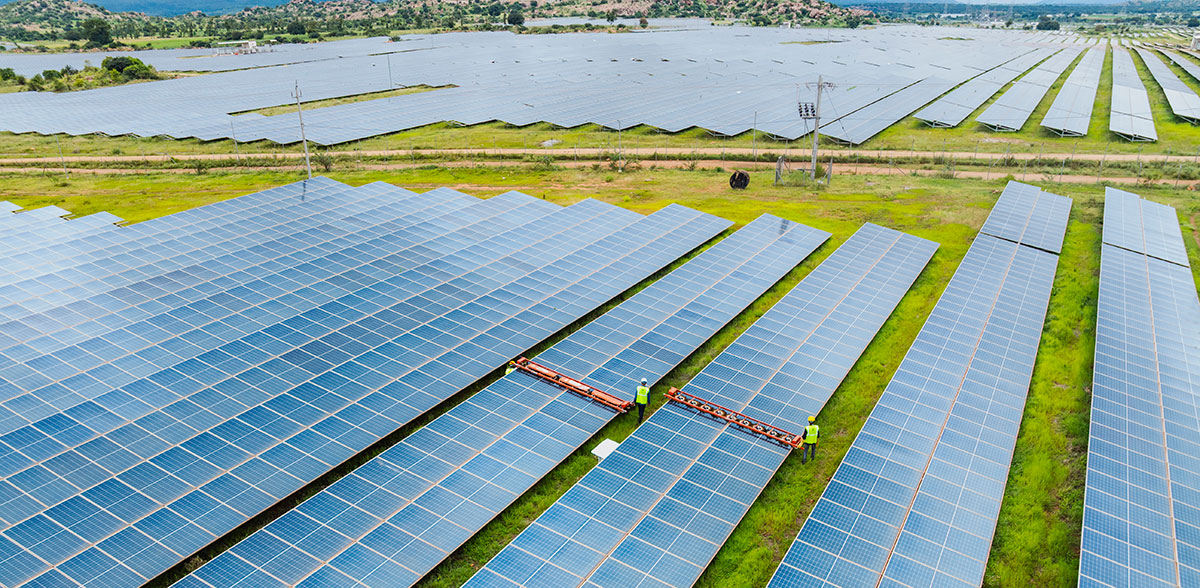
JSW Energy has steadily built a strong foundation in Solar Power Projects, positioning itself as a major force in India Solar Power development and Green energy India initiatives. One of the company’s most significant milestones is the commissioning of its 225 MW Vijayanagar Solar Power Plant, which became operational on 7 April 2022.
Located near the JSW Steel complex in Vijayanagar, Karnataka, this plant marked JSW Energy’s first utility-scale solar power project and operates under a 25-year power purchase agreement (PPA), ensuring long-term energy stability and predictable renewable output. This project reflects how JSW’s solar power has become central to the group’s long-term clean energy roadmap and its commitment to Sustainable Energy India.
Strengthening its presence across key solar-rich states, JSW Energy has significantly expanded its renewable portfolio through strategic acquisitions of Mytrah Energy and O2 Power. These transactions have added substantial solar capacity across diversified geographies, accelerating the Company’s transition towards a cleaner energy mix. The inorganic growth strategy not only enhanced scale and geographic diversity but also enabled access to a high-quality pipeline of solar projects, reinforcing JSW Energy’s position as a fast-growing renewable power platform.
In Q2 FY26, JSW Energy commissioned its first 20 MW floating solar project again at Vijayanagar.
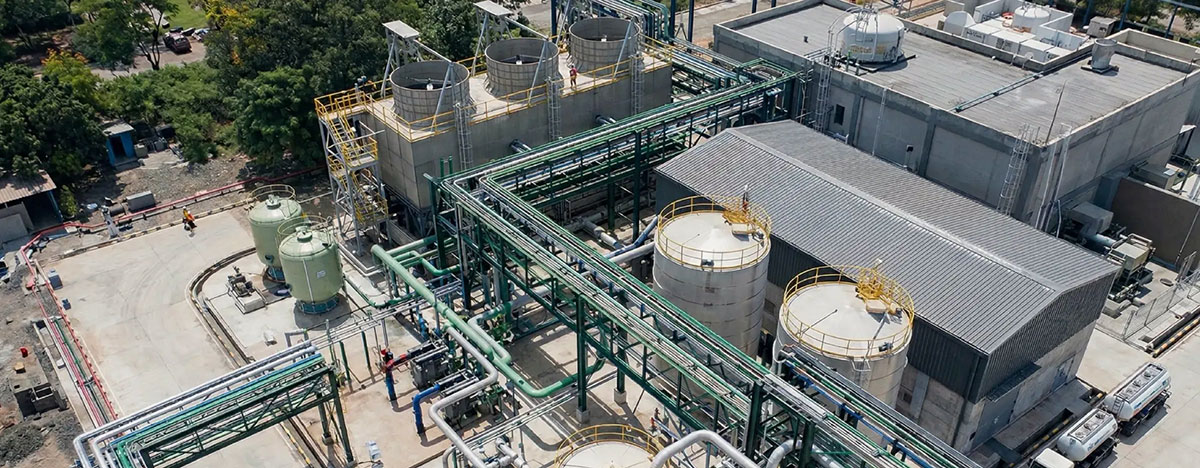
Beyond solar, JSW Energy is also expanding its integrated clean energy ecosystem. The company has commissioned India’s first and largest green hydrogen manufacturing plant at Vijayanagar, Karnataka, demonstrating how solar, hydrogen, and storage solutions are being linked to power industrial decarbonisation.
This facility is designed to produce 3,800 TPA of green hydrogen and 30,000 TPA of green oxygen, aligned with India’s national clean energy manufacturing targets. With a long-term vision of achieving 30 GW of locked-in generation capacity and 40 GWh of energy storage capacity by FY2030, JSW Energy is actively driving India’s Renewable Energy Transition through scalable solar and clean power infrastructure.
Together, these initiatives show how JSW Energy, supported by strong JSW sustainability principles and complementary growth in JSW wind energy, is playing a defining role in shaping the future of Sustainable Energy India through high-impact, utility-scale solar infrastructure.
JSW Energy has embedded sustainability at the core of its growth strategy, with a clear roadmap to achieve net‑zero emissions by 2050 and align with global climate commitments. The Company has already reduced its greenhouse gas (GHG) emission intensity by ~22% from FY2020 levels, with FY2026 intensity at 0.59 tCO₂e/MWh and is targeting a further reduction to 0.39 tCO₂e/MWh by 2030. A key driver of this transition is the accelerated expansion of its renewable portfolio, which reached ~7.8 GW in FY2026, supported by 2.6 GW of new renewable additions during the year. These initiatives underscore JSW Energy’s commitment to delivering reliable, affordable, and increasingly decarbonised power.
Beyond emissions, JSW Energy has made significant progress in resource efficiency and environmental stewardship. The Company operates with 100% fly ash utilisation, reinforcing circular economy practices, while managing over 2.0 million tons of non‑hazardous waste through recycling and reuse. Water conservation remains a key priority, with all plants maintaining Zero Liquid Discharge (ZLD), alongside targeted reductions in water intensity. Initiatives such as rainwater harvesting, biodiversity protection programmes, and plantation drives further strengthen environmental outcomes. Collectively, JSW Energy’s integrated approach - spanning decarbonisation, resource optimisation, and responsible operations, positions it as a leading player in India’s transition to a low‑carbon, sustainable energy future.
JSW Energy has outlined a clear and ambitious roadmap to expand its role in India Solar Power and broader Green Energy India initiatives. As per the shared data, the company is targeting 30 GW of total generation capacity and 40 GWh of energy storage capacity by FY 2030, driven primarily by additions to its renewable energy portfolio.
JSW Energy has already surpassed 13.9 GW of installed generation capacity and remains on track to achieve its 2030 targets of 30.0 GW of generation and 40 GWh of storage. The Company continues to strengthen its portfolio in solar and wind energy, along with energy storage systems, reinforcing its transition towards a diversified clean energy platform
The company is also strengthening its position through large-scale Solar Power Projects, including a 700 MW solar capacity Power Purchase Agreement (PPA) with NTPC, connected through the Inter-State Transmission System (ISTS) and State Transmission Utility (STU) networks at a tariff of ₹2.59 per kWh for 25 years.
In addition, JSW Energy has 29.6 GWh of locked-in storage capacity through battery and hydro-pumped storage projects, while building a sizable renewable energy pipeline. These strategic initiatives are designed to support India’s Renewable Energy Transition and strengthen Sustainable Energy India.
JSW Energy stands at the forefront of India’s clean energy movement, with a strong focus on JSW renewable energy and long-term JSW sustainability goals. In FY 2026, the company grew its total generation capacity to 13,454 MW, comprising 5,658 MW of thermal, 3,646 MW of wind, 1,631 MW of hydro, and 2,058 MW of solar projects, demonstrating a balanced and reliable energy portfolio. The net generation of JSW’s Solar Power Plants stood at 3,949 MU in FY 2026.
With total locked-in capacity of 32.1 GW and a long-term vision to reach 30 GW of total capacity by 2030, JSW Energy continues to strengthen its contribution to Clean Energy Solutions and the national energy roadmap. Its goal of achieving carbon neutrality by 2050 further reinforces its leadership in India’s green energy sector. Through consistent investments in solar power, storage infrastructure, and next-generation energy technologies, JSW Energy is actively shaping India’s Sustainable Energy future while supporting the country’s journey towards a low-carbon economy.


