


Though 71% of Earth’s surface is covered with water, clean and safe freshwater suitable for drinking, cooking, bathing, and growing food is a scarce resource, especially in certain parts of the world. An absence of clean and safe freshwater, and associated problems with sanitation, also significantly increases the risk of illness and diseases, specifically for the young and old. As the population continues to grow and societies develop, the need for water is only going to increase, resulting in greater competition between the demands of industry, agriculture, and domestic households. Operations of JSW are also very much dependent on the availability of water which makes it a material topic for the company. JSW has identified risks associated with water scarcity and is continuously working towards water conservation and reduction of water consumption in its operations. There were no water-related incidents with substantial impacts on costs/revenues in the last four fiscal years. During FY 2025-26, our freshwater consumption target is 72.59 million m³.
During FY 2025-26, total net freshwater consumption in water-stressed areas was 57.502 million m³, against a target of 68.61 million m³. The reported data covers 100% of the Company’s operations and is subject to independent third-party assurance by Bureau Veritas (India) Pvt. Ltd. in accordance with ISAE 3000. The Company continues to implement water efficiency and conservation initiatives across its operations, particularly at sites located in water-stressed regions.
| Metric | Unit | FY 2022-23 | FY 2023-24 | FY 2024-25 | FY 2025-26 | FY 2025-26 Target |
|---|---|---|---|---|---|---|
| Total net freshwater consumption in water-stressed areas* | Million m³ | 26.851 | 28.221 | 28.671 | 57.502 | 68.61 |
JSW Energy systematically tracks and maps water use and local water-stress exposure across its production plants using recognised water-risk assessment tools, including water-stress models developed by the World Resources Institute. During FY 2025-26, 4 of the Company’s 83 production plants were identified as being located in water-stressed areas. These plants represented approximately 5% of the Company’s production plants and 57% of its cost of goods sold. The assessment findings are integrated into site-level water-management and business-continuity measures, including water-use optimisation, recycling and reuse, rainwater harvesting, storage infrastructure and diversification of water sources.
JSW Energy Barmer recently underwent a comprehensive water assessment conducted by CII-TWI, culminating in the Water Neutrality Report. This report was developed to evaluate the plant’s water consumption patterns, conservation initiatives, and offset strategies, drawing from client-provided data, site visits, internal evaluations, and publicly available sources. While due diligence was exercised throughout the analysis, the findings are based on inputs that may carry inherent uncertainties. The report is intended to guide JSW Barmer toward achieving water neutrality in alignment with NITI Aayog’s national framework, and does not constitute legal or regulatory advice. Responsibility for compliance with all applicable environmental and regulatory norms rests solely with the plant.
As part of this study, JSW Barmer demonstrated a strong commitment to identifying and managing both dependency- and impact-related water risks. The assessment confirmed that:
Through this assessment, JSW Energy Barmer has reaffirmed its dedication to sustainable water management and continuous improvement, positioning itself as a responsible steward of water resources in the region.
JSW Energy identifies and assesses water-related dependencies, impacts and risks through its integrated Enterprise Risk Management and Environmental Management processes. The assessment is location-specific, covers short-, medium- and long-term horizons and considers water availability, quality, infrastructure reliability, local stakeholders and regulatory requirements.
| Risk | Nature of risk | Potential impact | Risk-management measures |
|---|---|---|---|
| Disruption of water supply from the Indira Gandhi Canal | Dependency-related risk and future water-quantity risk The Barmer plant receives operational water from the Indira Gandhi Canal through an approximately 180 km pipeline. |
Reduced or interrupted canal supply could constrain generation, require operation at reduced capacity and result in revenue loss. | The plant maintains sufficient water-storage capacity for approximately 30 to 45 days of full-capacity operations and can sustain operations for a longer period at reduced generation. Additional measures include water recycling, rainwater harvesting and maintenance of water-storage infrastructure. |
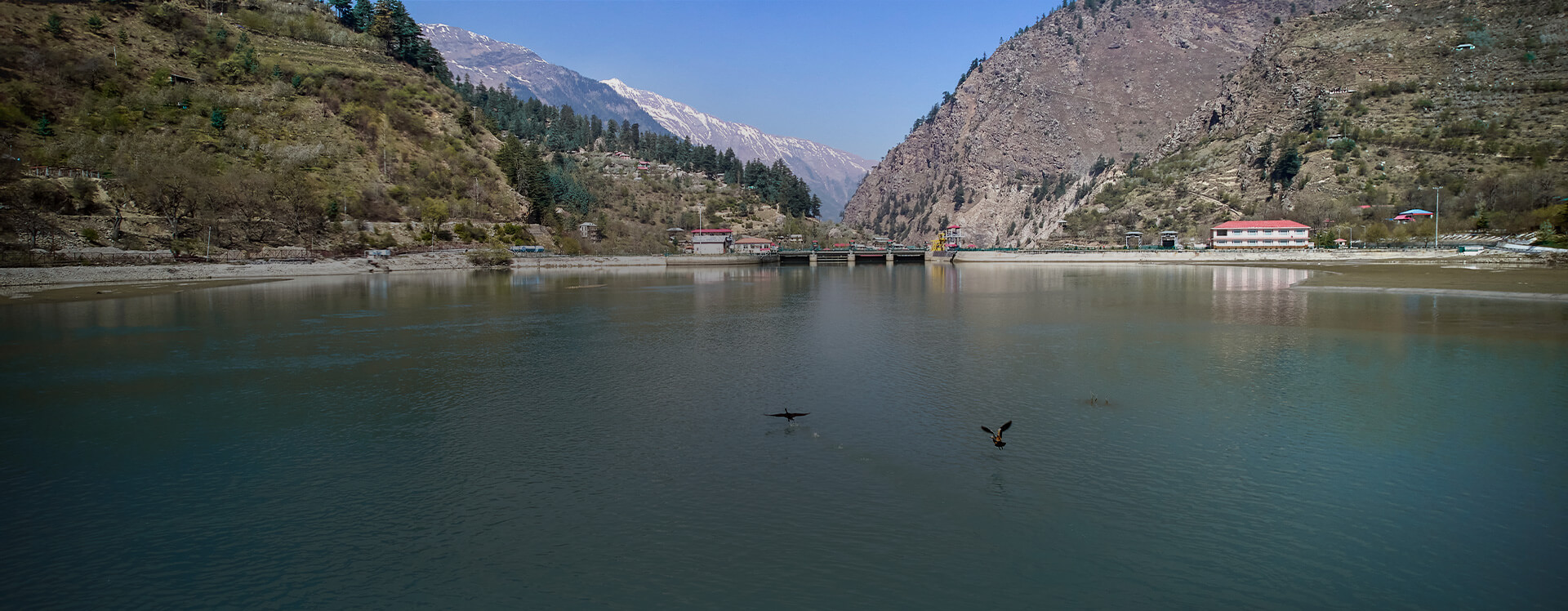
| Flooding and Glacial Lake Outburst Flood risk | Impact-related risk and future water-quantity risk. Hydropower operations in the Sutlej River Basin are exposed to flooding, GLOFs, high water flows, silt and debris. | Flooding may require excess water releases and temporary plant shutdowns. Potential impacts include damage to turbines and infrastructure, reduced generation, effects on vegetation and aquatic ecosystems, and risks to downstream communities and public safety. | Electronic flood-warning systems provide approximately two hours of advance warning. Additional measures include public-alert mechanisms, emergency-response plans and procedures, sediment management, coordination with local authorities, multiple communication systems and regular mock drills. GLOF studies have also been conducted in collaboration with reputed research institutions. |
| Failure of seawater intake infrastructure | Dependency-related water risk. The Ratnagiri plant depends on seawater intake pumps for condenser cooling. | Failure of a primary intake pump, particularly when the standby pump is unavailable, could reduce cooling-water availability, constrain electricity generation and affect revenue. | Two operating pumps and a standby pump are maintained through preventive maintenance, readiness checks and rapid switchover arrangements. |
| Impact of thermal-power operations on downstream water bodies and users | Impact-related water risk: Thermal-power operations involve process wastewater, cooling-water blowdown, ash-handling activities and cooling-water systems that could interact with surrounding water resources. | If inadequately treated, leaching from coal-combustion residuals could affect surface water, groundwater and downstream water users. Potential impacts include changes in pH, BOD, COD, TSS, TDS, dissolved salts, metals, oil and grease and water temperature, with possible consequences for aquatic habitats, drinking-water sources, community water access and public health. | All JSW Energy thermal plants follow a Zero Liquid Discharge strategy for process wastewater, under which wastewater is treated, recycled and reused within plant premises or used for horticulture. Domestic wastewater is treated through Sewage Treatment Plants, and cooling-water streams are managed in accordance with applicable environmental standards. Additional controls include Effluent Treatment Plants, lined storage and ash-management infrastructure, laboratory testing, regulatory compliance and periodic review of treatment-system performance. |
The water-risk assessment also considers future water-quality risks associated with changes in source-water quality and potential operational impacts from cooling-water blowdown, wastewater, thermal discharge and coal-combustion residuals. Relevant parameters include pH, BOD, COD, TSS, TDS, dissolved salts, metals, oil and grease and discharge temperature. Potential effects on receiving water bodies, groundwater, aquatic ecosystems, drinking-water sources, local communities, Indigenous peoples and other basin- or catchment-level water users are assessed. These risks are managed through Zero Liquid Discharge (ZLD) systems, Effluent Treatment Plants (ETPs), Sewage Treatment Plants (STPs), water recycling and reuse, cooling-water management, lined storage infrastructure, water-quality monitoring and compliance with applicable discharge standards.
The assessment also considers potential changes in local water-abstraction permissions, withdrawal restrictions, water allocation, water tariffs, Consent to Operate conditions, wastewater-discharge limits and regulatory requirements by SPCBs and CPCB. The assessment covers JSW Energy Limited’s own operations and relevant upstream activities, including external water sources, water-supply infrastructure and critical Tier-1 suppliers where water-related constraints could affect operational continuity. Water-related risks are integrated into operational planning, capital allocation and business-continuity decisions.
Our primary product is electricity, which does not require water during use of the product. Since the nature of product does not result into any risks on account of contamination of water or inefficient use of water, hence the aspect around water related risk during product use phase is not applicable for the Company


